

Today’s hook
Have you ever imagined testing—on a computer, with atomic-level detail—how a brand-new drug candidate fits into its target protein, DNA, RNA, ions, and even chemical modifications… all at once, before you synthesize a single molecule in the lab?
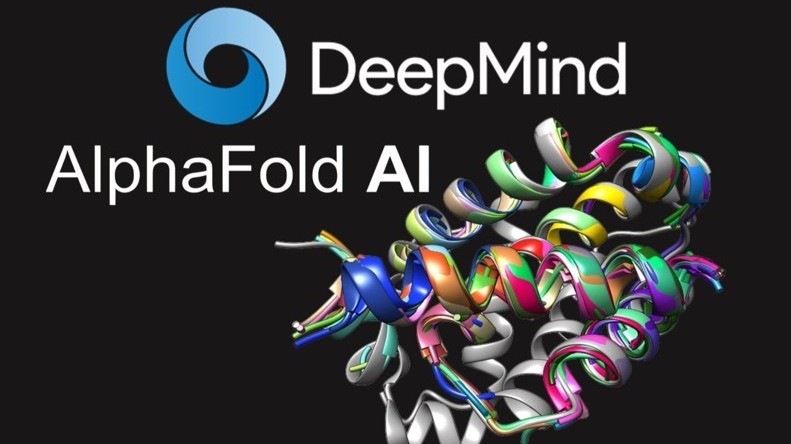
Today’s big science headline is the Nature paper introducing AlphaFold 3, the next generation of Google DeepMind’s AI model for predicting biomolecular complex structures. If AlphaFold 2 already transformed protein-structure prediction for individual proteins, AF3 takes a major leap: it can jointly model proteins, nucleic acids, small molecules (ligands), ions, and modified residues in one unified system.
The core message is straightforward: AlphaFold 3 can outperform specialized tools across multiple tasks—from protein–ligand docking to protein–DNA/RNA interactions and antibody–antigen binding. That changes the scale and speed at which we can think about drug discovery, structural biology, and even the design of personalized therapies.
The simplified deep dive
1) From “photographing” proteins to “filming” complex interactions
AlphaFold 2 showed that you could predict a protein’s 3D shape from its amino-acid sequence alone, often with accuracy comparable to crystallography in many cases.
AlphaFold 3 expands that game.
Instead of modeling just one protein, it models entire complexes, including:
- multiple proteins
- DNA and RNA
- small molecules (future drugs)
- ions and modified residues
It uses a diffusion-model style architecture—the same family of ideas behind modern image generators. Here, instead of removing “noise” from a photo, it removes noise from a cloud of atoms until a coherent structure emerges.
Quick analogy: if AlphaFold 2 took a sharp “portrait photo” of a single protein, AlphaFold 3 tries to capture a full “group photo,” with everyone interacting at the same time.
2) What does it do better than older tools?
The paper compares AlphaFold 3 with several specialized tools and reports meaningful gains.
Protein–ligand interactions (docking)
AF3 shows substantially higher accuracy than many of the leading docking programs used in drug discovery.
Protein–nucleic acid interactions (DNA/RNA)
It outperforms predictors built specifically for these interactions—tools that previously “owned the territory.”
Antibody–antigen complexes
It’s notably more accurate than AlphaFold-Multimer v2, which was already a strong reference for complex prediction.
In practical terms, one unified system (AlphaFold 3) can match or beat tools designed for single, narrow tasks—meaning labs and companies may not need to maintain a separate stack of “a hundred different programs” for each interaction type.
3) Why does this matter so much for drug discovery?
This is where the innovation moves beyond academic curiosity and starts touching the future of clinical practice.
With a model like AlphaFold 3, it becomes more feasible to:
- rapidly evaluate how thousands of candidate molecules might fit into a target (a protein, receptor, or nucleoprotein complex) before spending on synthesis and expensive assays
- explore new areas of chemical space, including hard targets (flexible proteins, DNA/RNA interactions, targets with heavy post-translational modification)
- model therapeutic antibodies and antigens more precisely, helping optimize affinity and specificity
Since 2024, DeepMind not only published the paper but also provided free access for non-commercial use via an online server, and later released the AlphaFold 3 inference code publicly.
In practice, that means academic groups—and to some extent startups and companies—can test the model directly in real structural biology and drug-design projects.
4) Limits, caveats, and what’s still unresolved
As impressive as it is, AlphaFold 3 isn’t a crystal ball.
A few limitations worth keeping in mind (and widely discussed in the field):
- These are still computational predictions—they don’t fully replace experimental structures when absolute, regulator-grade detail is required.
- Highly flexible systems, multiple conformational states, and strong dependence on the cellular environment remain challenging.
- How to integrate these predictions into regulatory pipelines (FDA, EMA) is still an evolving conversation.
In other words: it’s an extremely powerful tool—but it needs to be used with critical thinking, experimental data, and solid biological context.
Implications and invitation
For me, the message of this Nature paper is clear:
Structural biology is entering the era of generative AI for real—and the line between “in silico” and “at the bench” is getting blurrier every year.
In practice, this is likely to:
- shorten cycles of drug discovery and optimization, especially for complex targets
- democratize access to high-quality structural models in places without crystallography or cryo-EM infrastructure
- accelerate research in oncology, infectious disease, immunotherapy, and rare diseases—where fine-grained molecular interactions are everything
At the same time, it’s a reminder that we’ll need new validation standards, good AI-use practices, and deeper collaboration between data scientists, structural biologists, clinicians, and regulators.
That was today’s dose of science in the Medical Innovation column.
Now I want to hear from you: do you already use AlphaFold (or similar tools) in your research workflow? Do you see real potential for this to shorten the path to the patient in your field? Share your take in the comments—and come back tomorrow for the next daily update on this fast-moving frontier between AI and biomedicine.